









Inside the Design-Led Prestwich Barbershop and Cafe, by Sonday Studios
On Bury New Road, one of Prestwich High Street’s newest additions is quietly redefining what a neighbourhood space can be.
31 March 2026
After successfully selling their home in Britannia Mills with Böhm, we sat down with owners Ciaran and Jonathan to reflect on their thoughtful renovation of The Boiler House. In this editorial, they share their journey with the property, from what first drew them to Britannia Mills, to their renovation strategy, and the impact of living in such a distinctive space on their daily lives.
The Boiler House is nestled in the courtyard of Britannia Mills, an award-winning heritage-led development in Castlefield. It’s both the interior design decisions, as well as the larger architectural moves, which make this property feel that it is an authentic reflection of the couple’s routines and taste, and truly worth exploring.
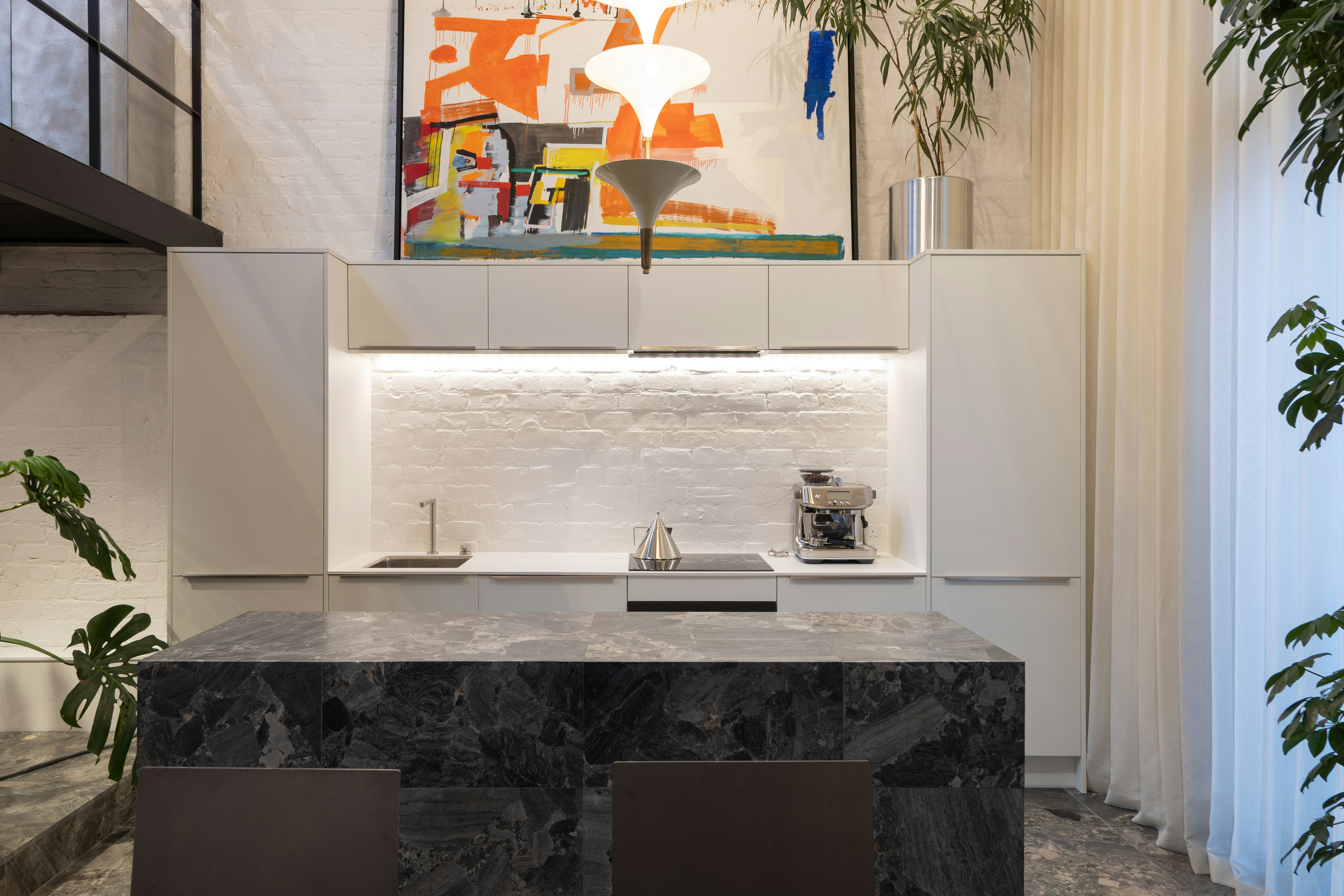
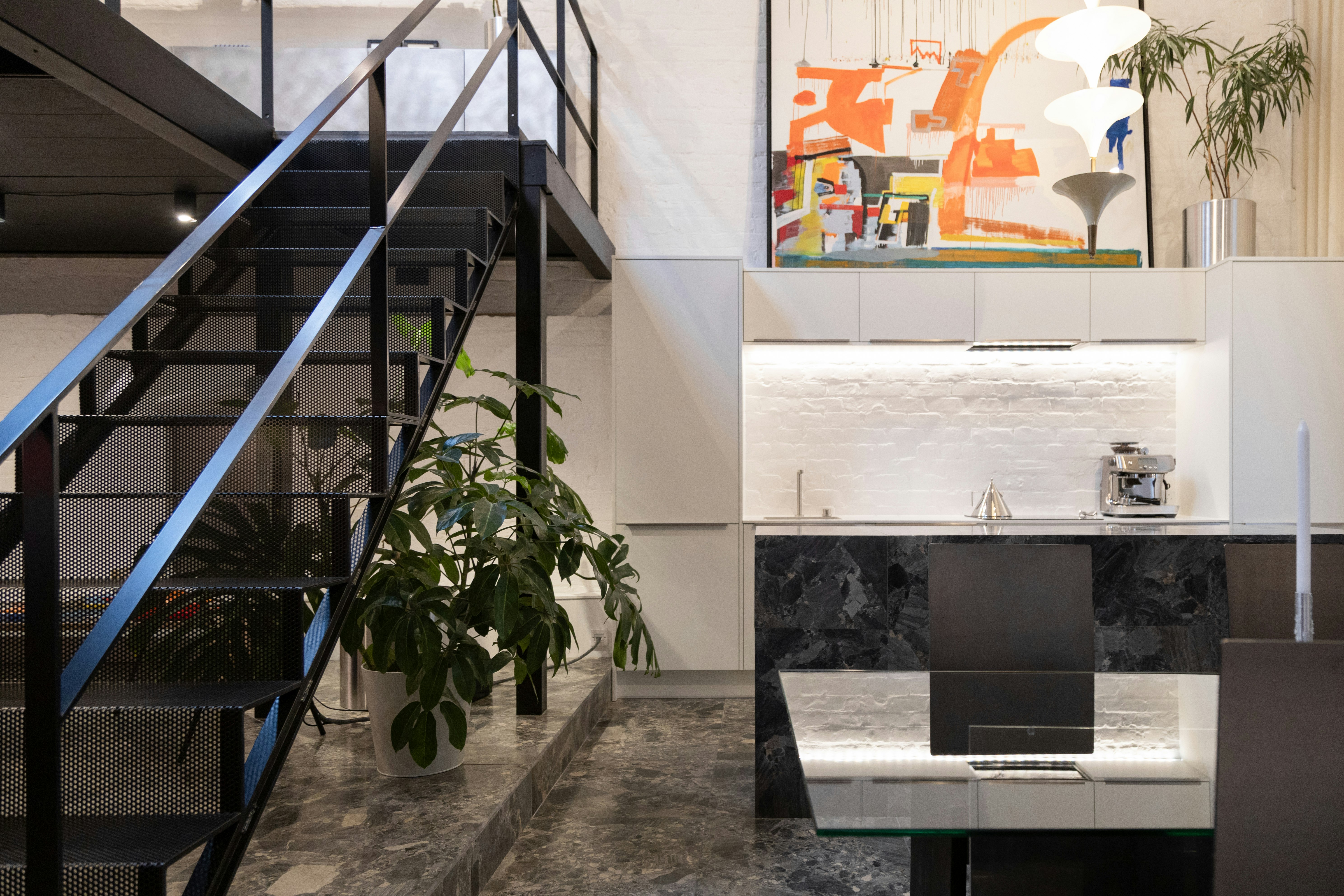
The home is unique in its confidence of exploring the open-plan concept, challenging preconceived ideas of spatial zoning with its almost complete lack of dividing walls. Upon ascending the marble staircase and entering the home, you are met with a triple height space, which is home to the kitchen and dining space. Ciaran and Jonathan have framed this impressive height with a vintage chandelier, which “floats in the heart of the space”, creating a moment which is both dramatic yet grounding. It is one of the couple’s favourite features of their home: “Seeing [the chandelier] through the shears when arriving home at night brings so much comfort.”
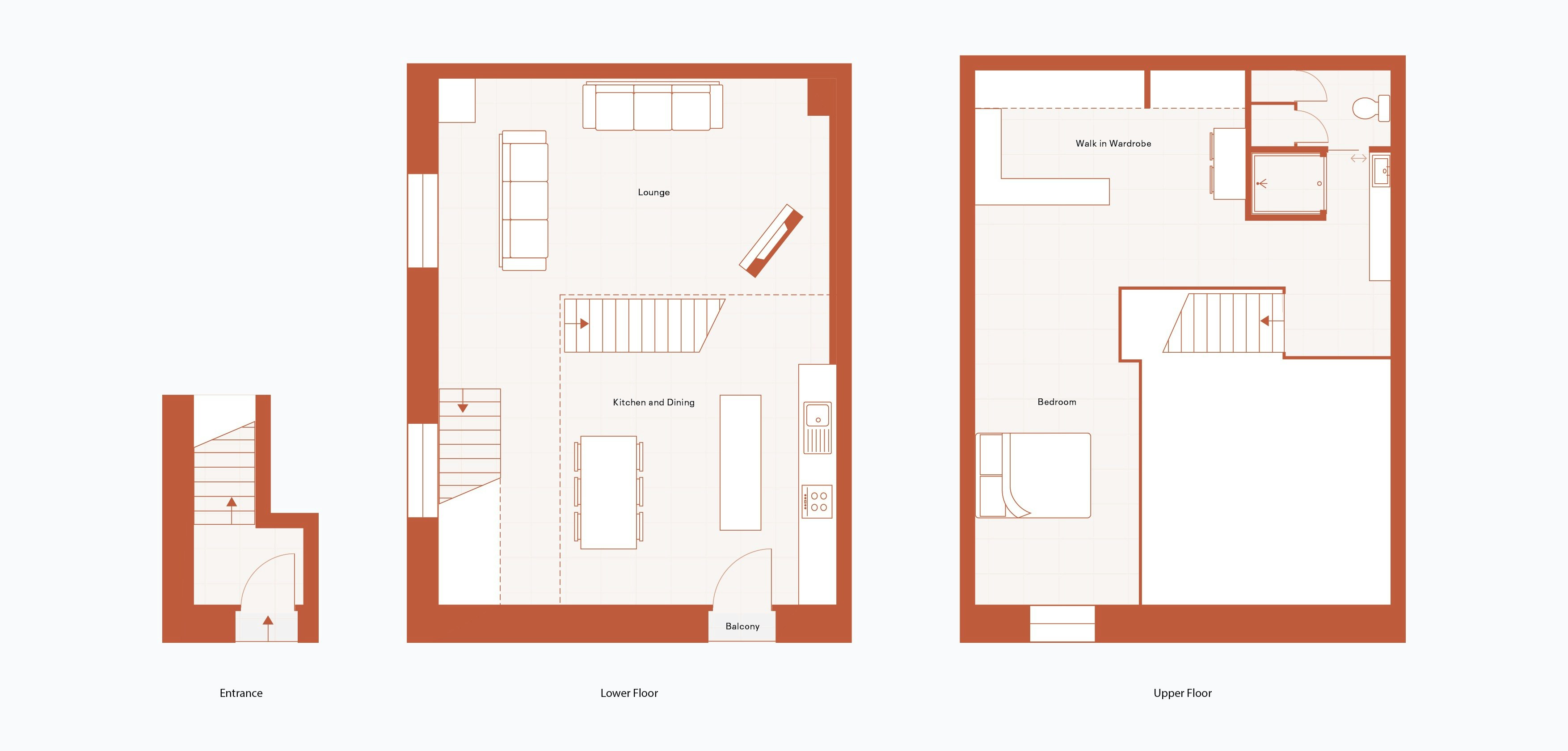
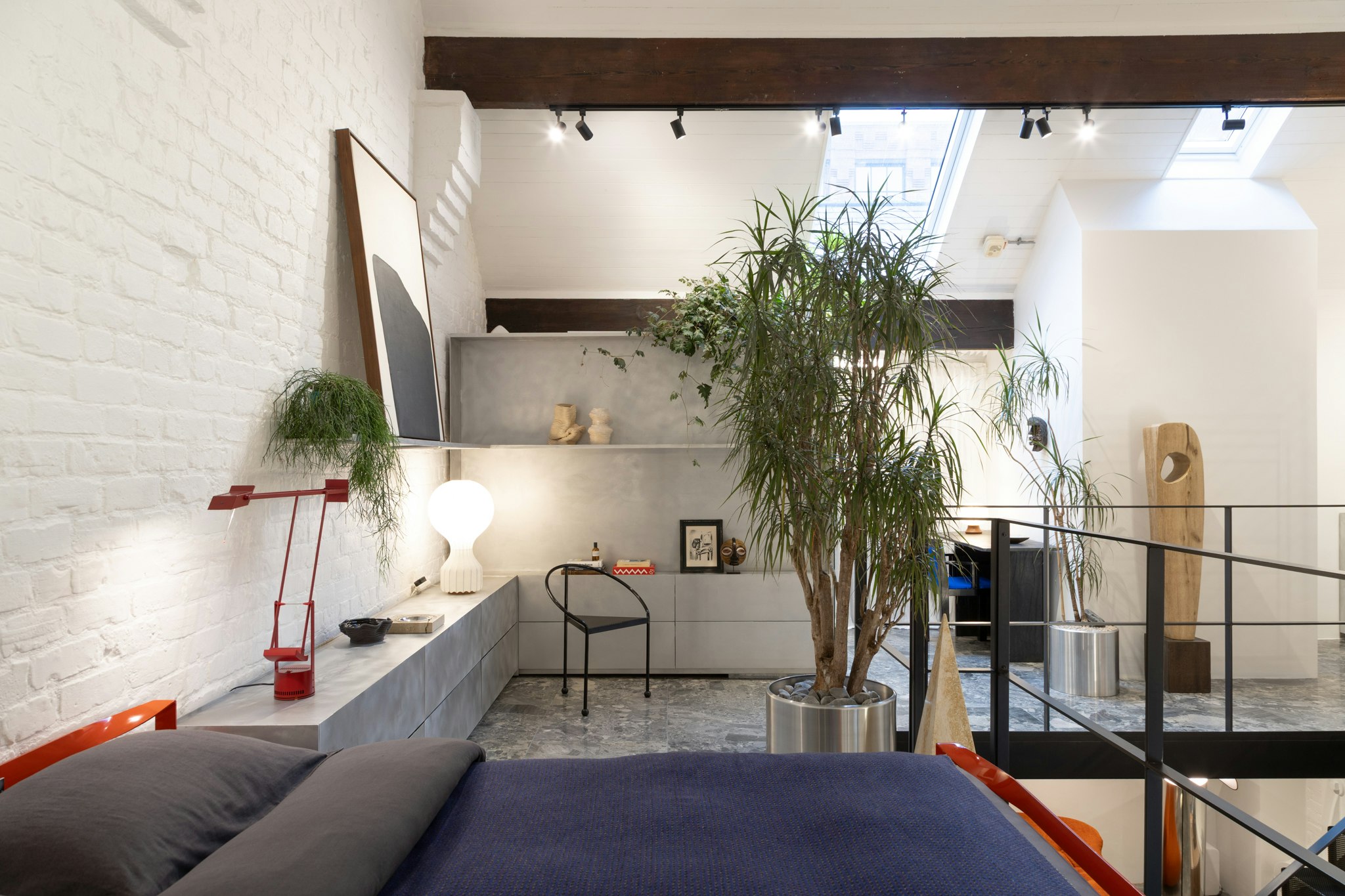
The couple's strategic extension of the mezzanine, which wraps around the perimeter of the void, is a key element of the renovation and unlocking of this home’s success. The mezzanine accommodates the bedroom, office, bathrooms and storage, and sits above the entrance foyer and living room, areas where a more regular ceiling height is often preferred.
In a home where all essential functions coexist within a single, fluid space, any necessary partitions are designed to “[flow] with the bones of the property, maximising light, ceiling height, and volume”. Rather than separating activities in a way that felt overly “[cut] off” from one another, the design considers how their relationships can shape daily life in a new way, and questions when spatial division is truly helpful. In challenging preconceived ideas of domestic living and layout design, the home operates as a cohesive and considered whole. This, Ciaran and Jonathan explain, makes it both highly manageable and practical for day-to-day life. “Being an open space means you can’t collect too many things, so we’ve learned to be quite ruthless with what we want to keep.”
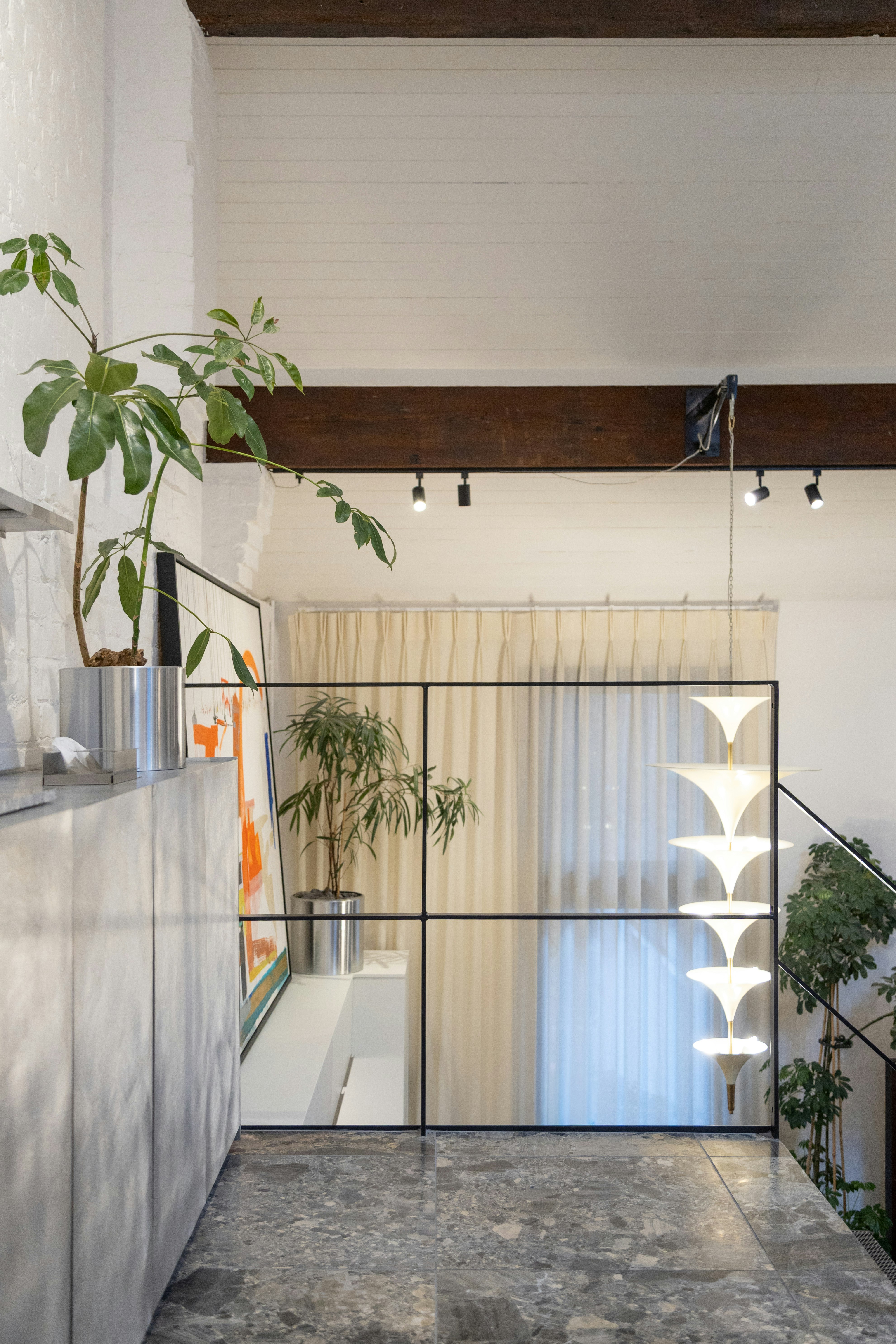
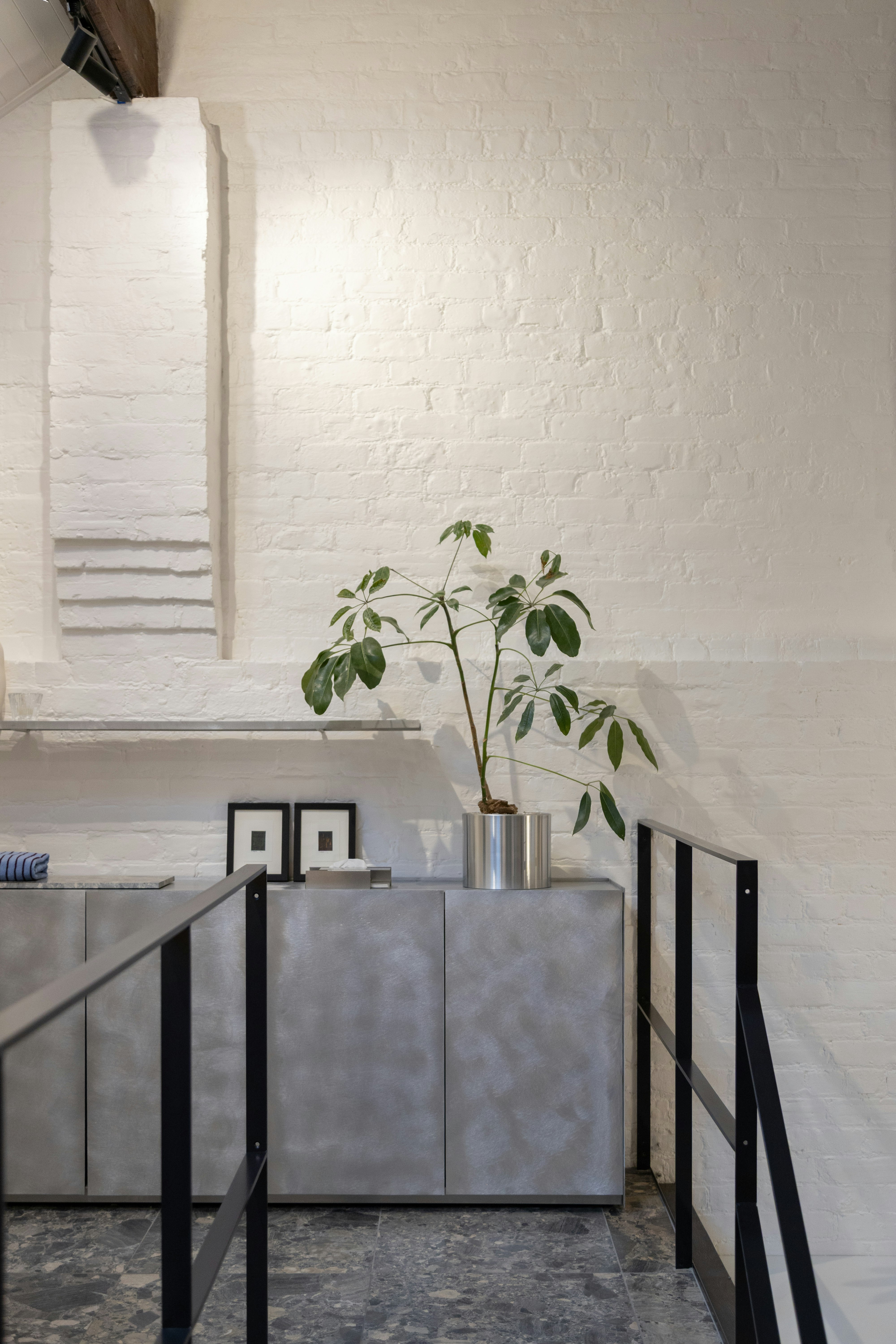
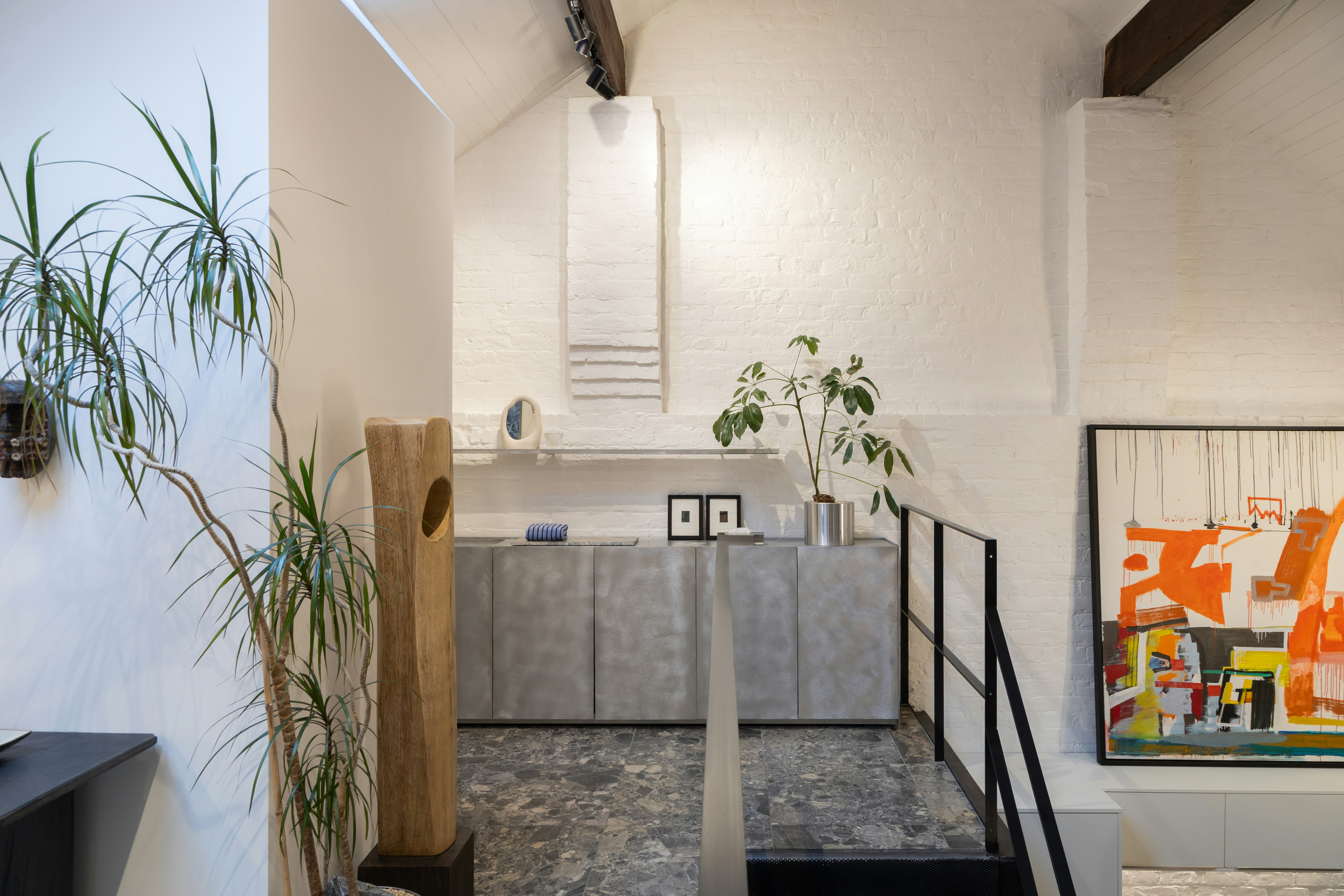
The philosophy of removing unnecessary partitions and allowing the interior to breathe is evident throughout every part of the home. One example is the “part landing, part vanity” at the top of the staircase, a space that would traditionally be transient or hidden away, but here becomes a key feature, celebrating the materiality and scale of the architecture. The pair reflect on this: “If we had closed off the bathroom to be a traditional ‘room’, you’d have been met with a wall when you got to the top of the stairs, which would have been very imposing, especially from the kitchen when you looked up at the triple height.”
However, approaching such an open-plan volume required careful planning, particularly in balancing the desire to maximise space with the need for privacy in certain areas of the home.
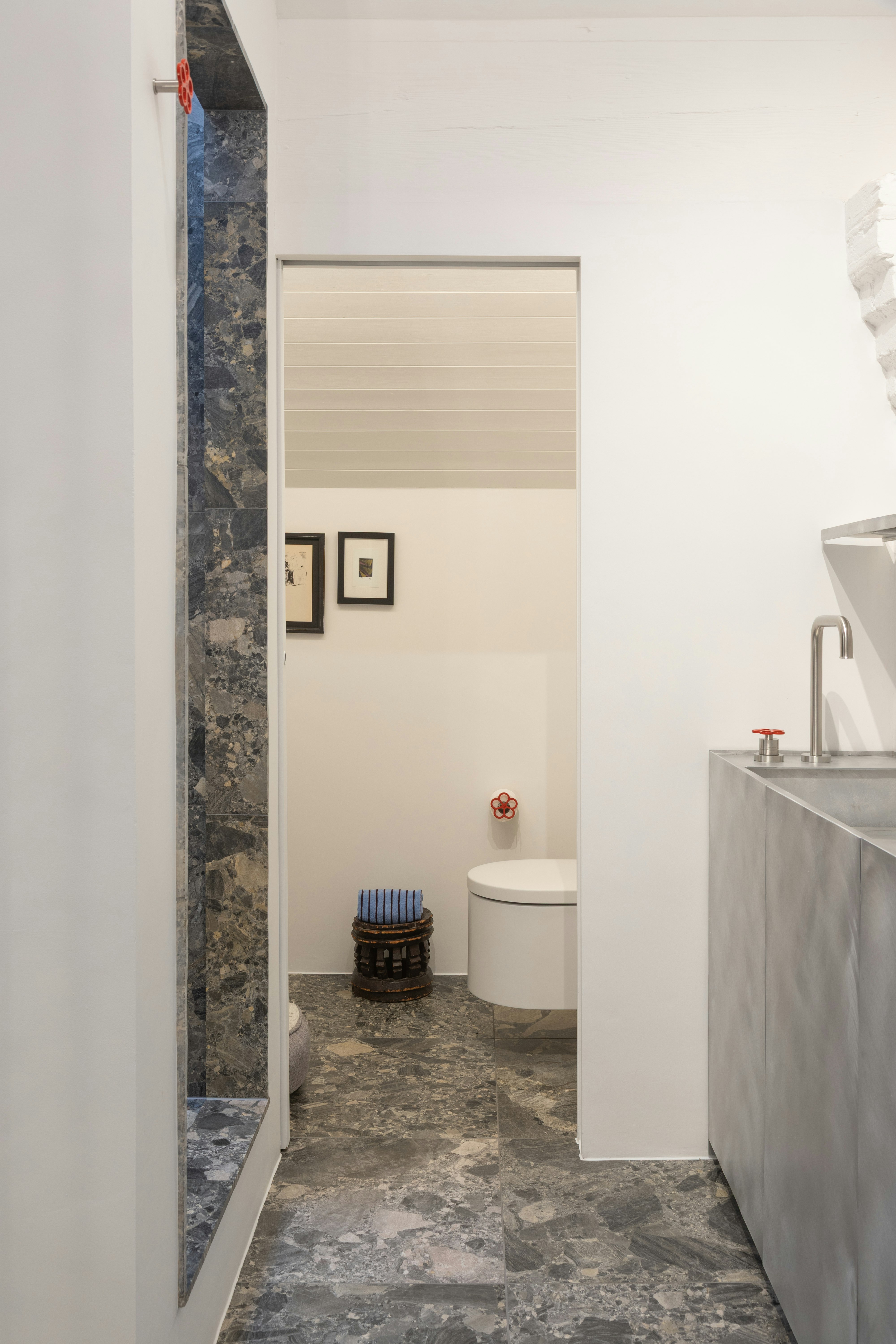
An example of this is the landing, home to the utility, sink, and storage space. The spacial principles here celebrate openness, and enjoy the benefits of skylights, as well as offering an opportunity to display a curated set of objects, both functional and decorative. Even the shower is without a door, relying on the depth of the space for practicality of avoiding the run-off of water, while offering glimpses of the marble within. It is only the WC which is concealed behind a pocket door, providing necessary privacy, as well as “offering a little space for the cats to retreat to.” The couple also share other strategies for managing the dichotomy between openness and privacy within such a volume, across both the ground floor and mezzanine:
“The dressing room is walk-in, with sheer curtains for some softness in what is a hard space, adding some femininity to the dressing space. Then, the bedroom appreciates the full volume of the space, with large plants for some screening, but no full walls. Downstairs, strategic placement of furniture and planting creates softer vignettes and divisions without needing walls - this allows as much light as possible into the living room, but gives some privacy from the kitchen.”
“Our daily routines and rituals feel effortless.”
While many design decisions can be carefully planned, some aspects of a space can only truly be understood by time spent living in it. This is what Ciaran and Jonathan found when it came to the broader zonal decisions.
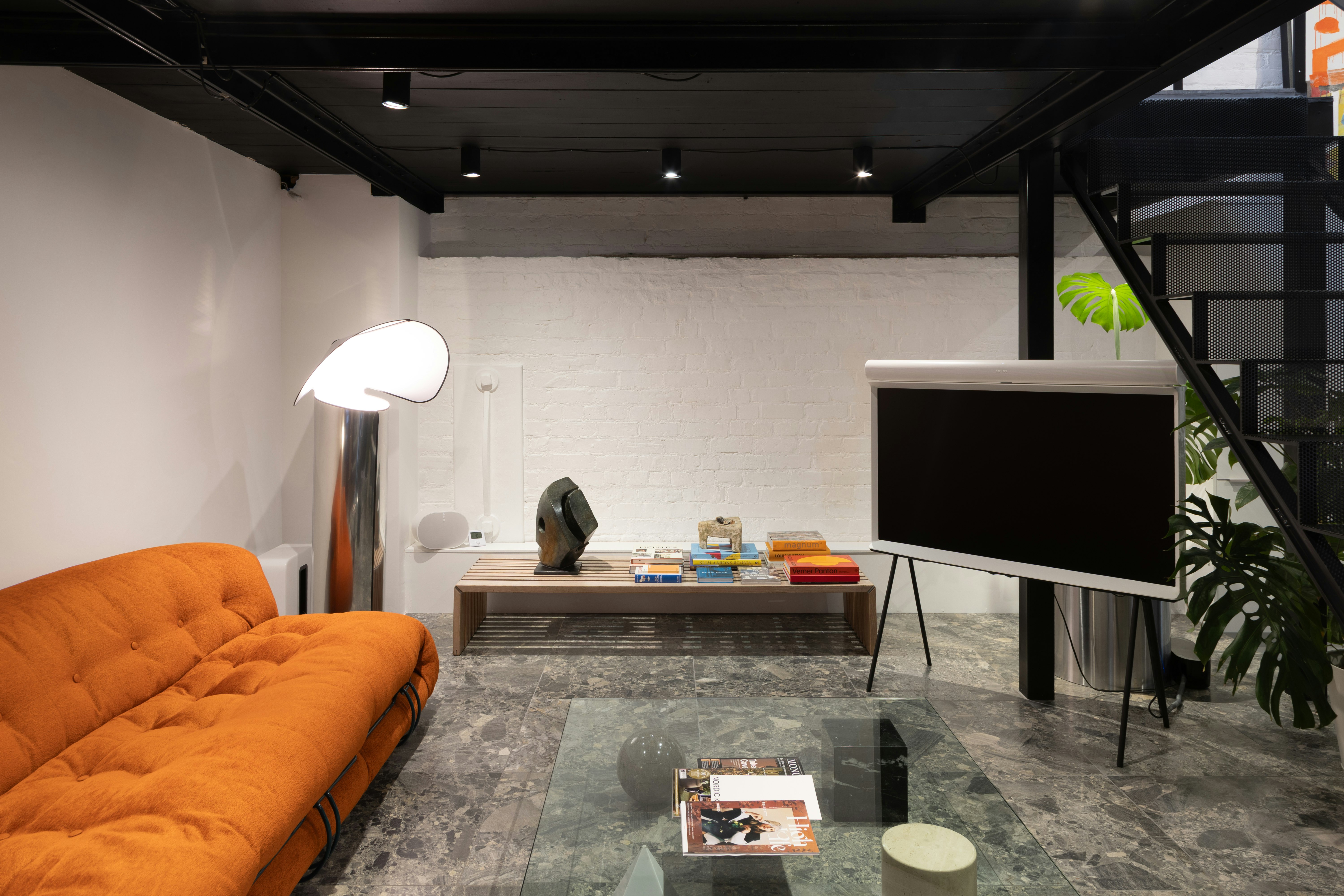
“The kitchen was originally in the lounge, but we found we were spending most of our time during the day and early evening in the darkest, lowest-ceilinged space. We made the bold move to swap these, and it was fundamental to how downstairs flowed. It enabled us to create three well-proportioned ‘zones’ - cooking, dining, and living - with hybrid spaces for working downstairs. This made it versatile, with cosy evenings (and better acoustics for movies) in the ‘snugger’ lounge, and maximum height, light, and space for kitchen discos on the other side. It also encouraged us to use the balcony more by placing the door next to a functional space. Our daily routines and rituals then started to feel effortless.”
As well as creating a backdrop for efficient day-to-day routines, the space also lends itself naturally to hosting. The intentional design and careful curation mean that “the space is always ready for gathering”.
“It’s like having a dinner party in a gallery. We have music on, lights zoned, and candles flickering, allowing the house to take on a softer, more convivial atmosphere that feels more ‘gallery showing’ than home. We like to keep a balance between nights with multiple courses of great food, with lots of martinis and wine, and more relaxed evenings where friends come in their PJs and we laugh over a cheeseboard instead.”
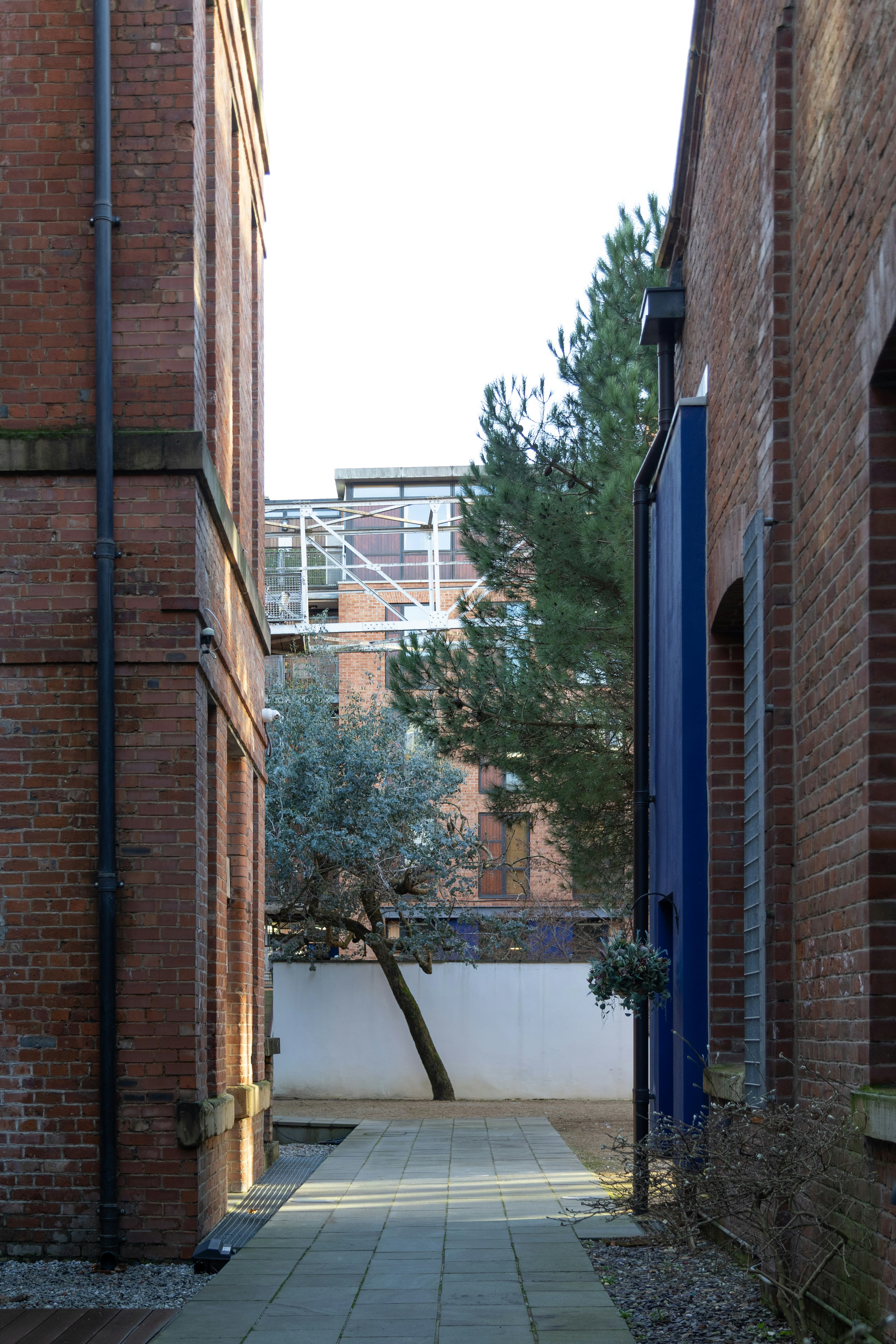
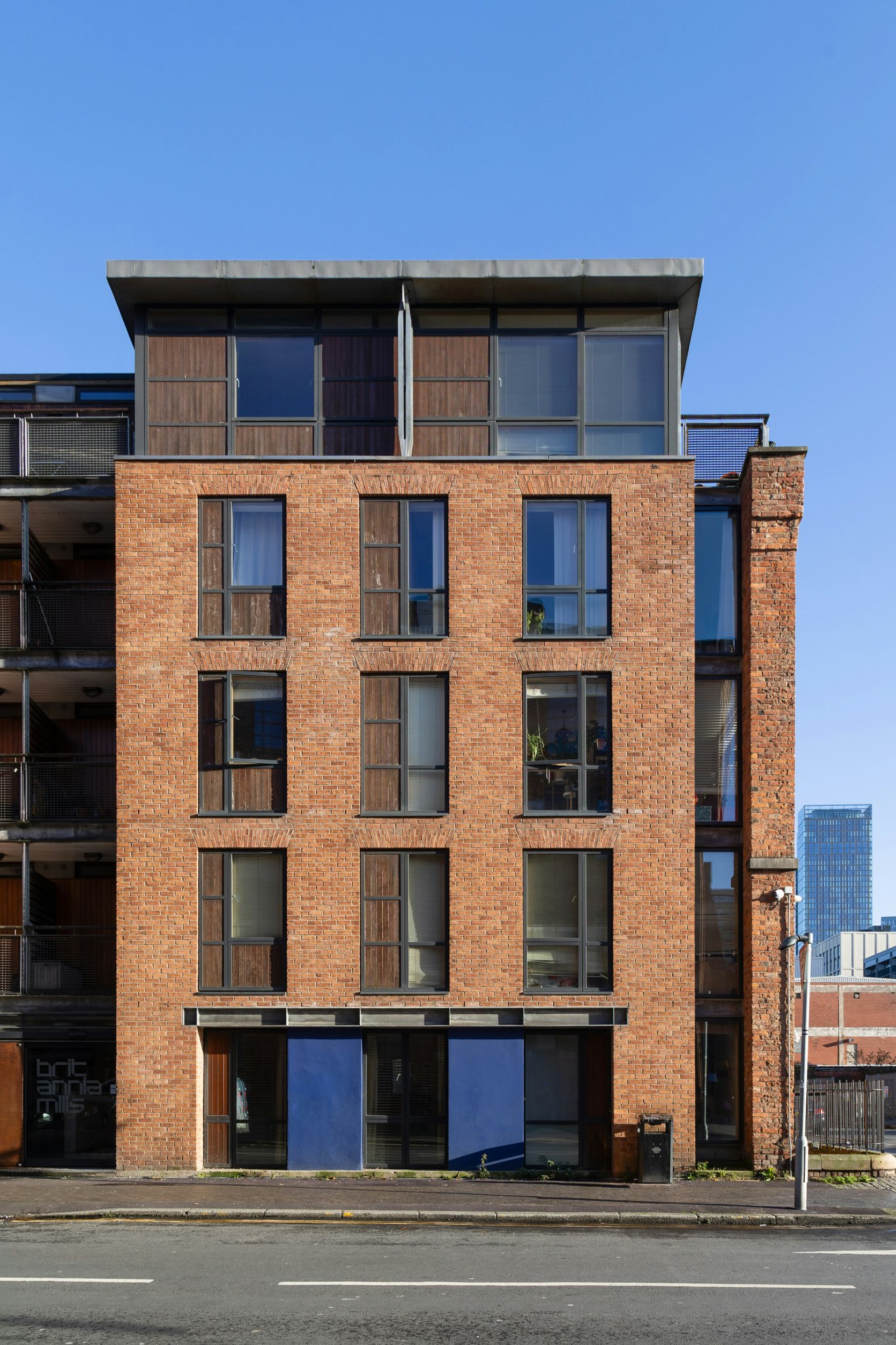
The home is tucked within Britannia Mills, occupying the original coal-powered boiler house of the mill. Located in Castlefield, the development is a collection of award-winning, warehouse-style apartments arranged across six historic buildings. Quiet courtyards, communal terraces, and generous garden spaces are interwoven throughout, offering a calm retreat from the city. This blend of “city centre life, but with some calm and character” was central to what drew Ciaran and Jonathan to Britannia Mills in the first place.
“We didn’t want a conventional apartment, we were looking for something a bit unique, with a standout space. The sense of peace when stepping into the courtyard, with the Japanese Acer and Eucalyptus trees rustling in the early autumn sun, meant we instantly loved the development. The central courtyard and canal inlet, giving that slice of greenery that Manchester really lacks, was an added bonus, along with the industrial feel of the overall finish Urban Splash had applied.”
The role of interior design, particularly art and object curation, is key in grounding a space of this scale. While smart storage solutions allow day-to-day clutter to be concealed, the careful selection of what remains on display becomes all the more meaningful. Ciaran and Jonathan reflect on this: “One of the hardest parts about displaying our curated pieces was how visible and open everything is, and how different it looked depending on the angle you were viewing from.”
As they describe here, the way one perceives the home shifts depending on viewpoint, creating a seemingly endless series of perspectives. The absence of dividing walls contributes to this, with constant glimpses between areas, from the kitchen viewed from the living space, to moments of the bedroom revealed at the top of the stairs. This sense of openness, and the constant visual connections it creates, was a key factor in how Ciaran and Jonathan approached art and object curation within the home.
“We ensured there was a consistent red thread of postmodernism throughout, then overlaid a colour palette that was consistent, ensuring it showed up in each space, but not always in the same materials or textures. From there, we just layered in what we loved. Some people find our home a bit precise and not relaxed or ‘homely’, but it’s these pieces, with their emotional value, that take it from a gallery space to a home.”
It is this level of consideration that makes the space feel truly special. Ciaran and Jonathan continue to appreciate details such as the marble, which runs confidently throughout the home, a decision they describe as a “game changer”: “The clean lines, particularly how we flowed it into the entry staircase without unnecessary joins, create a harmonious, clear feel.”
“We love curating our home, it’s a representation of our love of design, craftsmanship and travel."
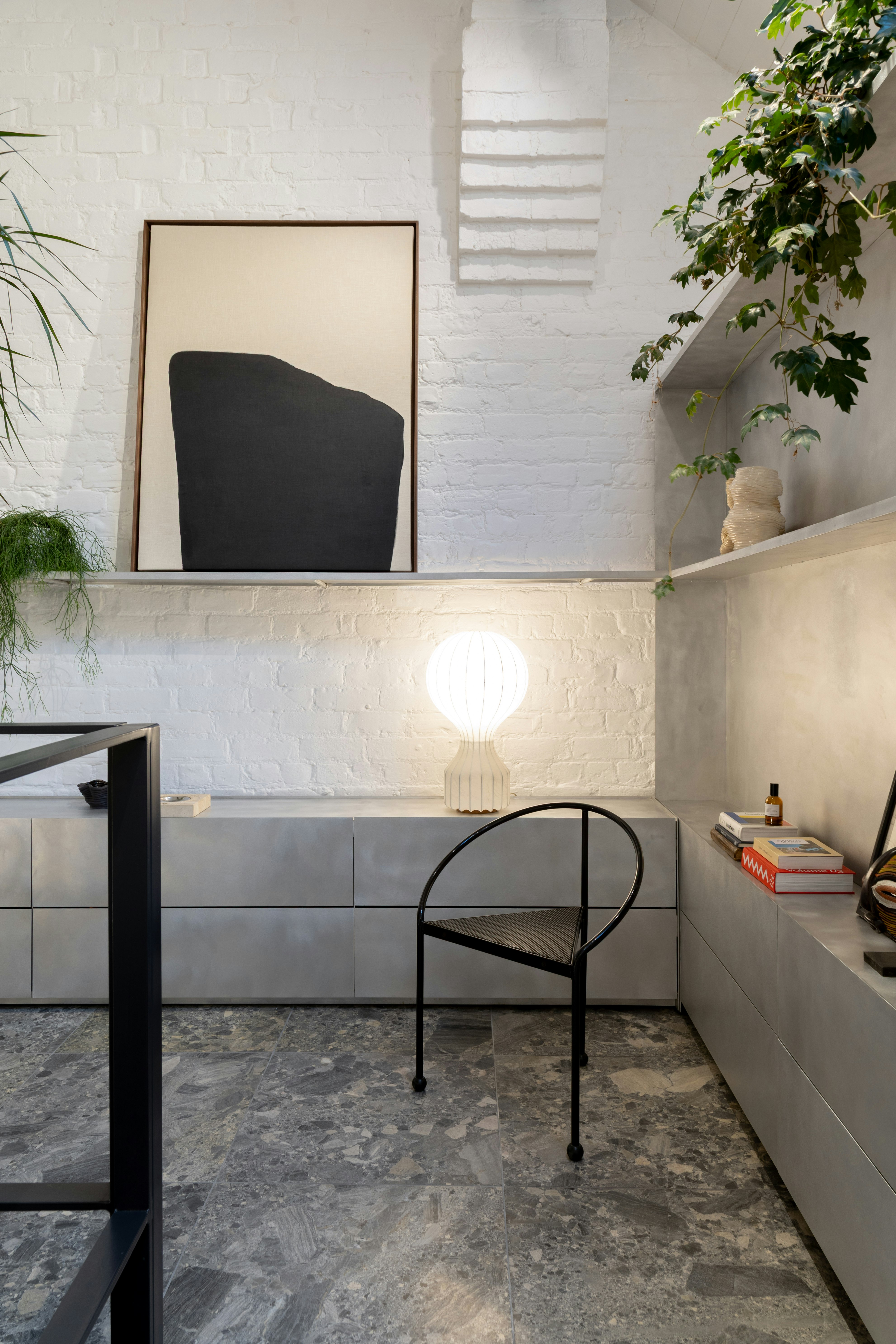
Ciaran and Jonathan’s home shares many features with that of a gallery space: high ceilings, a consistent material palette, and specialist lighting. This not only contributes to a sense of calm and clarity, but also creates a canvas for furniture that can be considered art in its own right. The couple shared some of the stories behind the standout pieces.
“Our Metafora coffee table (pictured below) is a masterclass in Italian Postmodern design, created in 1979 by Lella and Massimo Vignelli as an exploration of geometry and history. It symbolises the foundations of Western Architecture and Euclidean Geometry, less like a table and more like a miniature landscape. The shapes are solid marble and weigh over 66kg in total. We wanted one of these for years, before finding one in Paris at Galeries Paradis, which we already adored. Rather than getting it shipped and risking it being damaged, we decided to go and collect it ourselves…and bring it back in hand luggage. You can imagine this was quite a stressful ordeal, with some questionable exchanges with airport security. Alas, we got it back in 3 bags, in 34°c, with only slight frustration shown on the day, but a strong drink enjoyed upon arrival home. It’s a great dinner party story, but one we promised not to repeat.
Until, we did the same thing with two small marble side tables from Nice, and a magazine rack from Brussels, Tribal carved masks from various locations across Africa, and a 26kg marble sculpture brought back (again, in hand luggage) from Cape Town. You can see a theme…!”
Another key consideration in a project like this is how heritage is approached: which elements to preserve, and when introducing something new becomes the most effective solution.
“The hardest decision we made,” Ciaran and Jonathan share, “was painting the brick white. Whilst the original brick brought texture and warmth in colour, it had been poorly patched and was inconsistent in tone, with crumbling parts that created a lot of dust. It also drank a lot of light from the space, and after our second winter in the house we knew it needed to change. We spent weeks filling all the gaps, with 4 layers of paint across it (and lots of clinging to the ladder at the peak).
We’re so pleased we painted it. It retains the beauty of the texture, but modernises the finish to give a gallery-esque feel, bouncing light around the house and creating the perfect backdrop for the marble floor and furniture.
The [original] floor was a mix of finishes, heights and materials, so we decided to simplify by introducing marble throughout. It’s controversial for bedrooms and dressing rooms, but we’re heavily influenced by post-modern Italian design, and wanted a new-age pallazzo-esque feel, with a warehouse gallery edge to it. The greys complement the building’s history as a coal-fired boiler house, while working with any colour pallet. Practically, it hides a multitude of sins too if you’ve not had time to run the vac around!
We kept the wooden beams for warmth, and the windows are all original. We then designed the staircase and handrail, which we had manufactured in powder coated black steel, a gentle nod to the industrial heritage of the building, but slimline and perforated to allow maximum light through into all spaces. The juxtaposition of clean lines against the atypical space, industrial texture and softness of the plants results in (we think) a sharp yet welcoming finish.”
“Visualise how you want to feel in the space, not how you want it to look.”
A renovation project of this typology is a significant undertaking, and Ciaran and Jonathan offer some advice to those considering something similar:
“Plan, plan and plan again. Live in the space, know how you want to use it, then start the work. We started some jobs too quickly and had to replace and redo things as our plans evolved. With it being fully open plan, touching one thing has a ripple effect throughout, so planning the entire space as a whole would really be sensible.
We found that trying to visualise how you want to feel in the space, not how you want it to look, really helped us pivot how we planned the space. This led to us landing on the layout upstairs and switching over the kitchen/living space, when we did this, it completely changed the flow of the house."
The Boiler House is a home shaped as much by its architecture as by its inhabitants. Every choice, from the strategic “big moves” of the renovation to the careful curation of the interior design, tells a story of how successful design can be when space and life work together in tandem. Ciaran and Jonathan’s experience shows that a home truly comes alive when it moves with daily life, and reflects the personality of the people within it.
On Bury New Road, one of Prestwich High Street’s newest additions is quietly redefining what a neighbourhood space can be.
Subscribe to our newsletter for property insights and updates.