
PINK: From Abandoned 1960s Stockport Office Block to Art Studio and Gallery
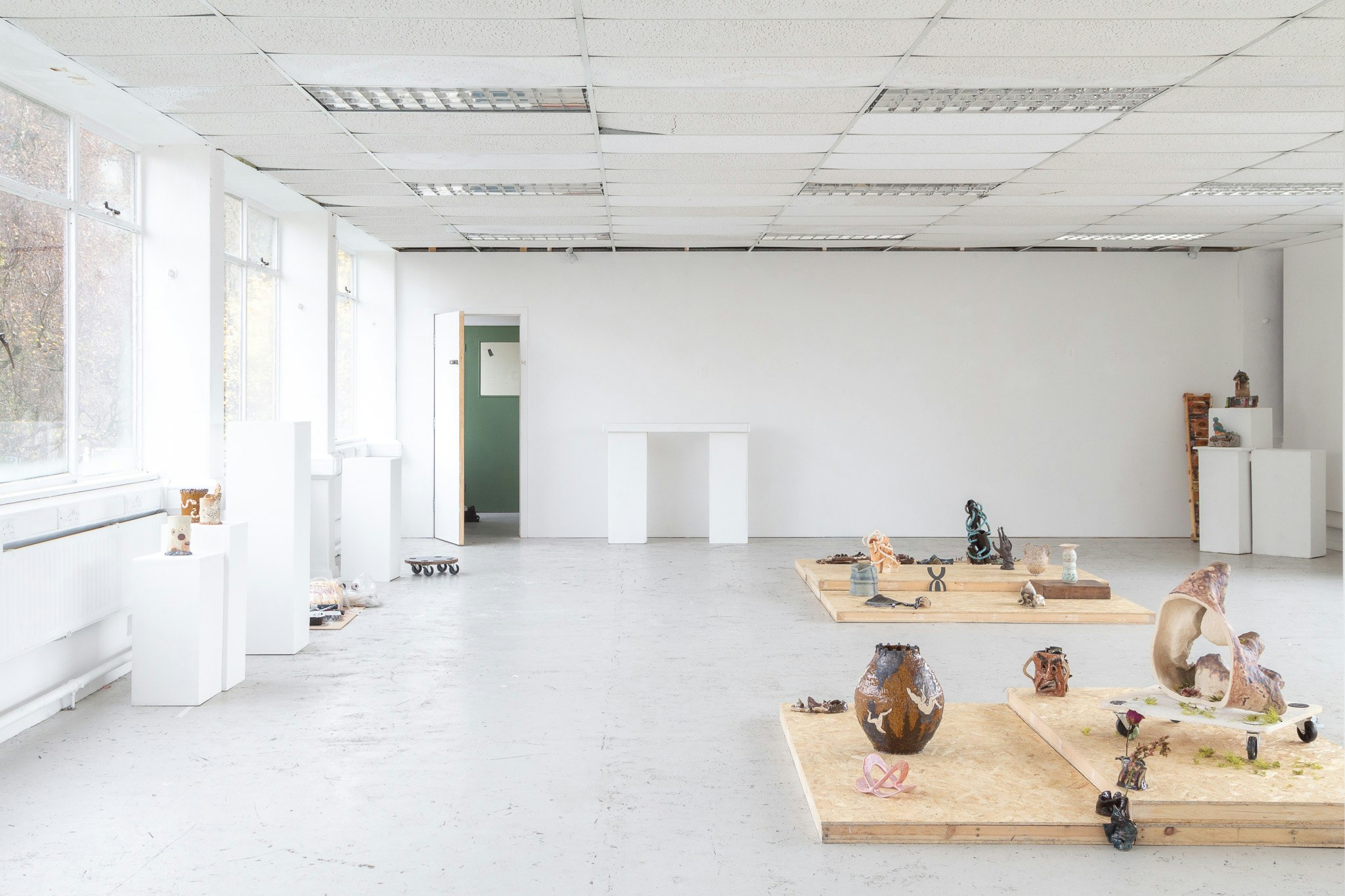
Böhm explores the retrofit and curatorial philosophy, of PINK, a Stockport-based art gallery.
.
Written by Sophie Atkinson Photography by Ella Wheatley
“I don’t particularly like gyms and I don’t particularly like swimming, either,” Paul Smith tells me, smiling. This makes him an especially unlikely member of Love Withington Baths — the group of intrepid locals that rescued the baths from the brink of closure back in 2013. If you’ve been to Withington Baths recently, it’s hard to imagine it ever having been under threat — with its pristine stained glass windows and booked-out yoga classes and pool slots, it’s obviously thriving. But in December 2012, the city council announced that Withington Baths was running at a significant annual loss and had £1 million of defects that the council didn’t have the cash to address. Given this, both Withington and Chorlton’s swimming pools would be closed and would be replaced with a new leisure centre at Hough End.
“It just seemed like a really bad idea,” Paul says of hearing the news. He was one of many local residents who went along to the meeting called by local councillors to explain their reasoning behind the closures — they claimed it was a response to austerity. This didn’t entirely add up to him. “The baths were very busy, it felt good in the evenings. So it’s hard to see how it wasn’t financially doing okay.”
The other issue, Paul explains, was that despite being built back in 1911, it wasn’t a listed building. The fact that there was no plan for what would happen to this building after it closed — one designed by the same architect behind Chorlton Library — gave him and others pause for thought. The building would require a lot of expensive repair work, which meant it was unlikely to remain standing, he thought. More likely, whoever bought the land would demolish it. Plus, while he didn’t like swimming himself, his kids did and he regularly brought them to the pool — his second child was still learning to swim when he heard about the council’s decision.
Paul wasn’t the only one who was worried. Other local residents he knew attending the meeting expressed similar sentiments, and they agreed to meet the following week. They would eventually become a group of seven people who would legally constitute as Love Withington Baths: all locals in their thirties and forties, most of whom had kids who used the pool. There was no time to waste — the council had agreed that Withington Baths would close in just three months’ time.
After organising a petition, they collected 8,000 signatures — the largest number ever presented to Manchester City Council. A protest march followed, with hundreds of local people outside the baths with homemade banners. “We didn't make it a political issue, but it became one,” Paul explains. An election was coming up, and both Labour and the Lib Dems wanted to be seen as actively supporting it. Fortunately, trying to actively support the baths while simultaneously trying to close them wasn’t compatible, Paul explains.
Hoping to convince the council there was a strong business case for the pool, the group commissioned independent research into the area. One report drew on stats like the size and average age of the local population to estimate how many members Withington Baths could have even with Hough End around. Paul still recalls the exact figure: 1,454 people, and the fact that this number of members would translate to a sizable sum of money.
Off the back of this, two beautiful things happened. For one, Love Withington Baths (which I’ll refer to for the remainder of the article as LWB) were able to borrow £50K from a social lender to get started. For another, the council relented — instead of closing the pool, they finally agreed the group could run the leisure centre. LWB had everything they needed to get started.
“We didn't make it a political issue, but it became one."
Paul was excited and intimidated all at once. Yes, the group could draw on relevant experience they shared: for one, Paul ran his own business helping sports clubs access funding, and another of the group, Dave Payne, had project-managed regeneration projects in the public sector for decades. But none of them had run a leisure centre before. Plus, the group wanted to hire staff from scratch. Paul remembers trying to persuade Reece Marshall — who still works for the baths today — to join them. Reece would have to leave his job at a supermarket to do so. “And I'm thinking, you know, if he comes here, he loses that job. And are we going to last more than three months?”
The council were understandably wary about giving the building to a group of people who were managing a sports facility for the first time. As such, they were granted a two-year lease initially, which meant they had to pay back their loan more quickly than they had hoped.
Money was tight. Paul credits the fact that they’re still running the baths to the fact they took on the leisure facility in June, not March. The leisure industry is especially busy in autumn and at the end of winter, he tells me. But summer is a notoriously challenging time for the industry — they came perilously close to running out of money to pay staff in August and were only able to stay afloat by paying people late. Thankfully, the students all came back in September. “They all paid up for membership and we were cash rich and that was it,” he explains.
There was also the larger issue of the building itself. After decades with very little maintenance, it wasn’t just ailing — it was dangerous. At one point in the first two years, a glass panel fell out of the glazed roof above the pool — fortunately this took place overnight so nobody was swimming at the time. But there were also plenty of wins, too.
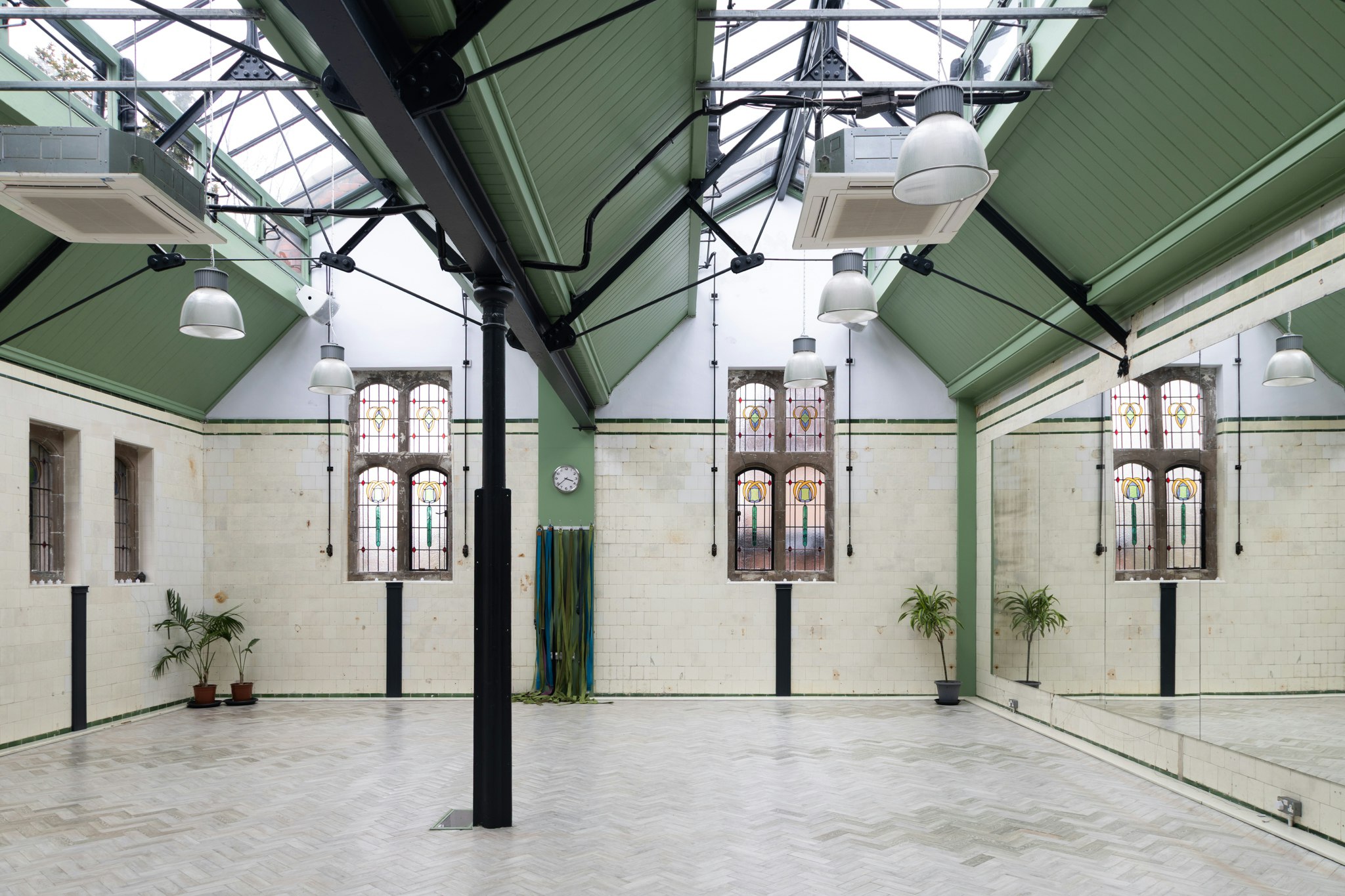
Alongside the loan, they also raised £25,000 to create a beautiful yoga studio. This had underfloor heating and they also converted a room used for a bit of boxing and heavy weights into a second studio. At the time they took over, there were only 18 classes per week, but Paul had a hunch this was way below the number of classes people in the area wanted. “There was nothing during the day — in the morning, say, or around lunchtimes,” he explained. These days, the baths host over 120 classes a week.
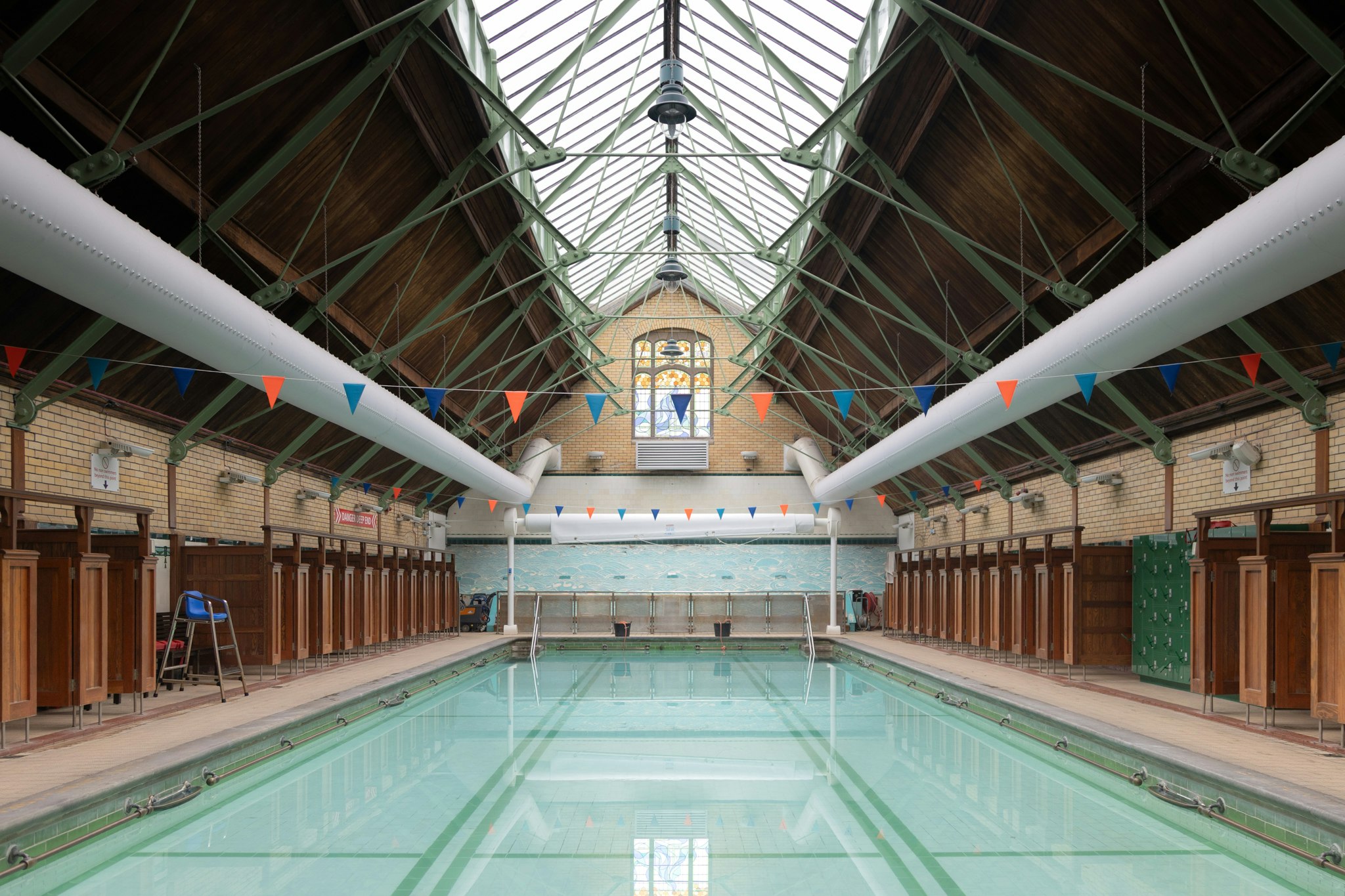
By removing a false ceiling, LWB revealed a glazed roof lantern nobody had known was there
Progress was steady. Over three years, LWB doubled the number of people with gym membership and tripled the number of children enrolled in swimming classes.
In 2017, having started to see what they could do, the council granted LWB a substantial extension — a 30-year lease. This allowed them to secure large grants, and with their own money included, the baths raised the £1.1 million that the architects estimated they needed for the renovation programme.
But then Covid-19 hit and the lockdown meant everything ground to a halt. In 2022, the building work began — and not a moment too soon. As the workmen examined the roof, they told Paul it wouldn’t have lasted another winter, it was so close to complete deterioration.
Alongside lots of different structural work, most of the stained glass windows were restored to their original design. Since there were no photographs or drawings of what the vast window hanging at the front of the pool looked like in 1913 when the building was completed, this meant LWB had an opportunity to create something contemporary. They invited a local artist, Amy Glenister-Marshall, to submit some designs and there was a call out on social media for suggestions — lots of people suggested they include the bee that is so often associated with Manchester.
Amy wove the bee into a honeycomb pattern which featured key dates from the building’s history: 1911, when the foundation stone was laid; 1913, when the building opened; 2015, when the community took over and 2023, when the restoration was completed.
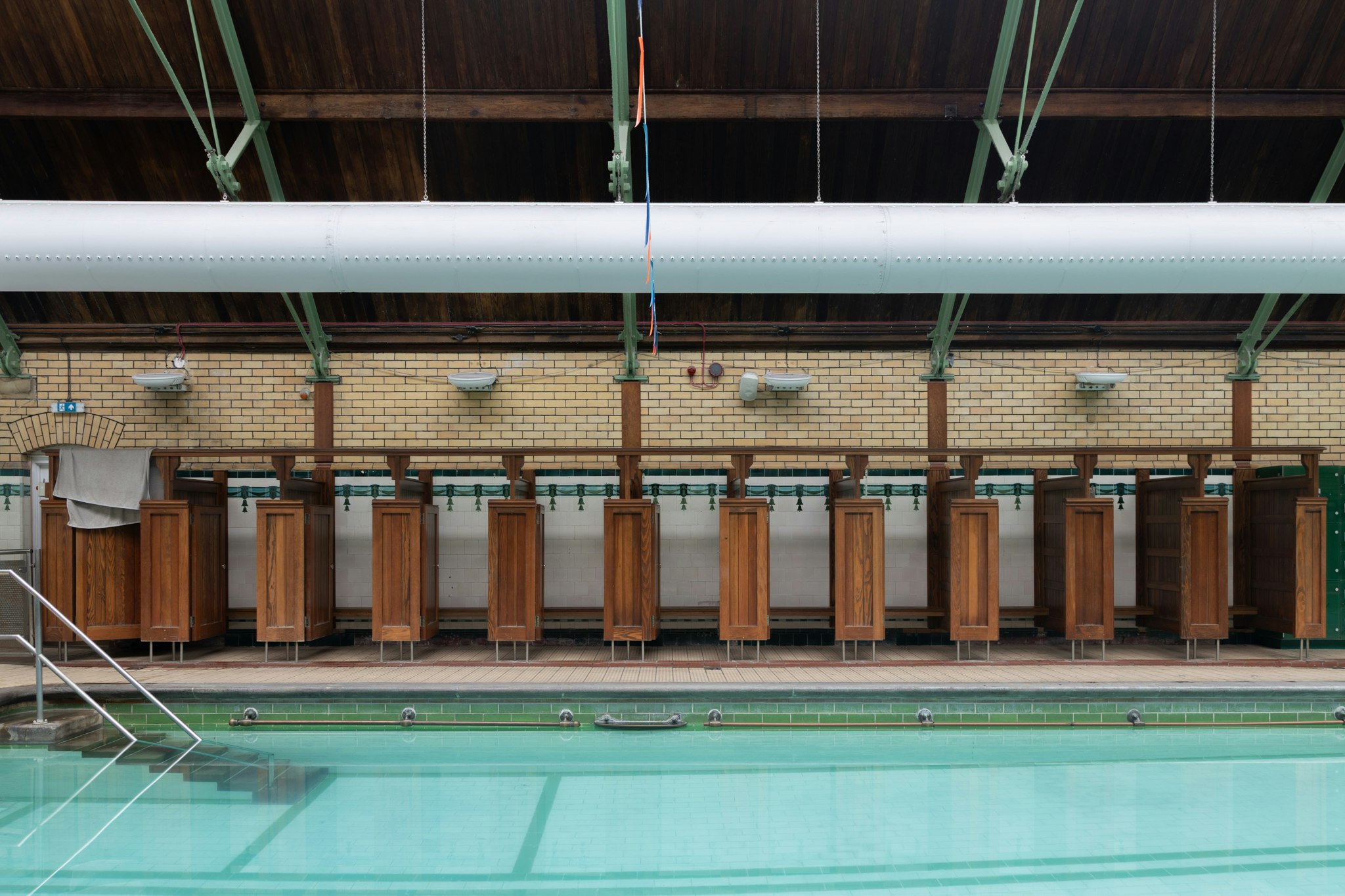
Withington Baths Swimming Pool
But what did that completion feel like for those who used the baths regularly? When I talk to a couple of people who can speak to the before and after of the Love Withington Bath takeover, they are complimentary about how the building has evolved. Anna Gidman used the baths for the first time as a toddler learning how to swim in the 1970s. Back then, there wasn’t much in the way of glamour at a local baths: she remembers plasters and hair floating in the water. It wasn’t much better in the early 2010s, prior to Love Withington Baths taking the steering wheel.
“It was a right mess,” she recalls. “Horrid. It was dirty, they'd sawn off the winders that opened the windows, things like that.”
Another local, Sakinah Mulla, has similar memories. She used to take her daughter to swimming lessons since they only lived seven minutes away. The proximity was appealing — the state of the pool rather less so. She remembers slime down the wall at one end of the pool and some of the showers not working.
How are the baths these days, I ask. “It’s just way better managed when it's looked after by people who care,” Anna says. Sakinah is impressed by the way the classes have changed, too. “They are different and they are better,” she says. She says the heating in one of the studios makes a huge difference when she does yoga. Plus, it’s a really welcoming community. “You have a variety of people attending these classes and everyone is so friendly,” she says.
“It’s just way better managed when it's looked after by people who care.”
Anna, a senior lecturer in architecture at Manchester School of Architecture, thinks the care aspect of the equation — maintaining Withington Baths, rather than razing it to the ground and constructing a new leisure centre — is something key which is missing from a lot of contemporary buildings. She explains that in the Edwardian era, buildings would often be constructed with a flat upstairs or adjacent house for a caretaker who would maintain the building and know it inside out. “We are not thinking about longevity and care. Too often we build to make a profit and move on.” She argues that visiting or being a member of Withington Baths means being aware of palimpsest — of navigating the layers of history that are an intrinsic part of the story of an Edwardian building.
Anna’s right, of course: the building itself is made up of layer upon layer of renovation work. But in speaking to Paul and Anna and Sakinah, there’s a palimpsest of memories, too: of recollections stretching back decades, from Anna learning to swim aged two years old to Sakinah doing HIIT classes on the grass outside Withington Baths during the Covid-19 pandemic to Paul slowly piecing together how to run the leisure centre together with the rest of LWB. Yes, thanks to their efforts, it’s a uniquely beautiful building. But it’s also a lasting community — and one Withington is all the better for.
Böhm explores the retrofit and curatorial philosophy, of PINK, a Stockport-based art gallery.
Subscribe to our newsletter for property insights and updates.